Documentary
Work-in-progress
75 minutes
Location: Greece, Germany, Iran
Producer: Amie Williams
Director: Aora Helmzadeh
For years, Aora has been filming her own life. Not as an artistic experience, but as a means of
survival. Born and raised in Iran, she grew up dreaming of freedom and equality. But when she finally reached
Europe, those dreams shattered. A romantic relationship with a German man ends not in salvation, but in a
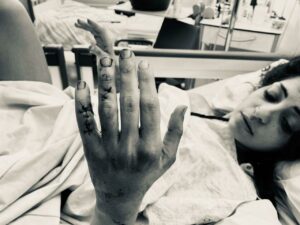
brutal act of violence: he tries to kill her by stabbing her forty times. Miraculously, she survives. In hospital,
Aora picks up her camera, and through her lens, starts to explore how to piece herself back together. It takes two
years alone, isolated, experimenting with the camera as a healing tool. Just as she starts to feel better, she receives a
call from German authorities, telling her that her ex-husband had been released from jail. Not offered
protection or counseling, even his family accuses her of trapping their son into marriage. She flees from Germany
to Greece to rebuild her life and there meets Ahmed, a gentle, loving Palestinian man who joins her in the
Free Gaza movement. But their relationship starts to unravel from the pressures of living in an unwelcome
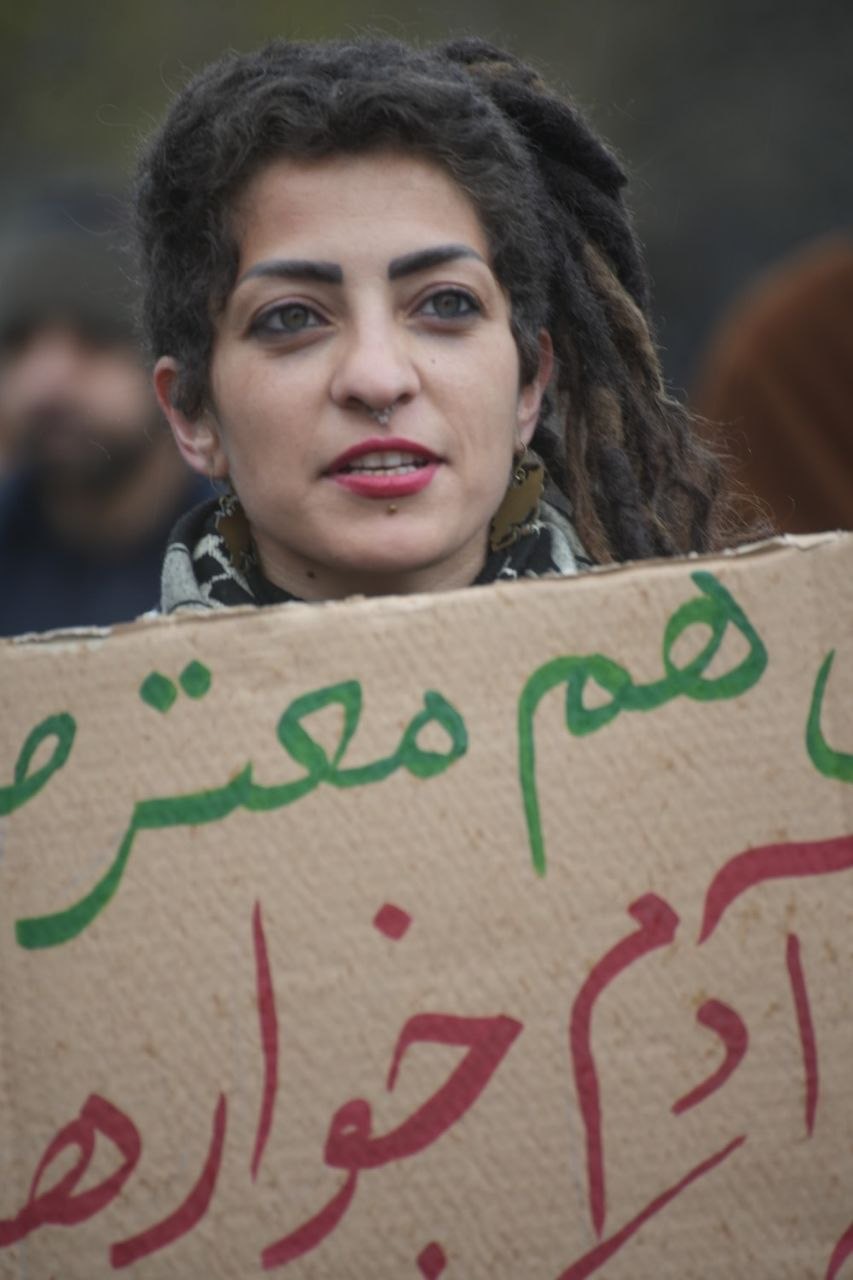
country. Because of her activism, Aora is deemed a threat to the state and detained by Greek authorities after a peaceful
demonstration. Meanwhile, her mother dies unexpectedly in Tehran, and she makes the decision to return home
just as Iran erupts in civil unrest, on the brink of war. Sequestered at home while Tehran is bombed by the US and Israel,
Aora heads into the streets to do the one thing she has learned to do: film and keep fighting.
As the war deepens and expands across the Middle East, Aora stands at a personal
and political crossroads, caught between an oppressive regime and a brutal, imperialist invader.
Should she stay in a homeland in crisis or return to Europe, where a decade of struggle there has been
met with exclusion and injustice. Problematic Girl from a Problematic Country is a film that confronts Europe’s cold mechanisms of control, and
the intersection of gender, migration, and colonial memory. Less partisan, more personal, it plays with the
idea that the conflicts of the world are played out on women’s bodies, and in order to survive, we must find a
way to fight back.